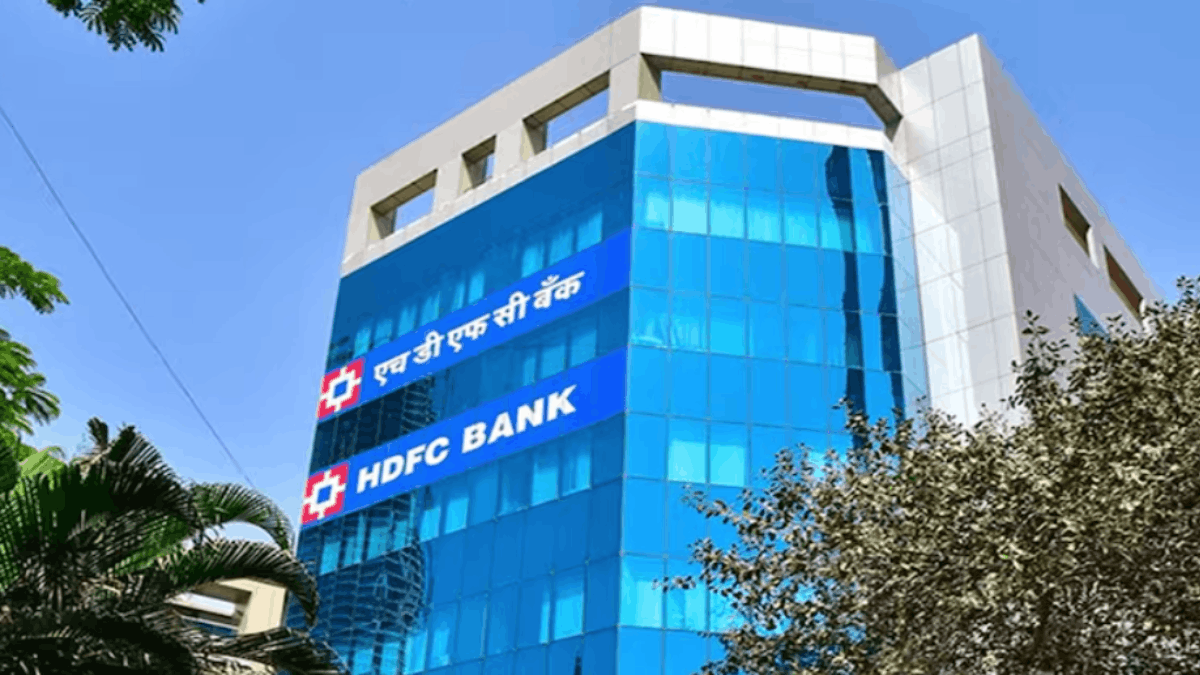
Shares of HDFC Bank came under pressure on March 23, declining by nearly 3% during early trading. The fall follows a downgrade in target price by global brokerage firm HSBC, which has raised concerns about potential compression in the bank’s valuation multiples.
Despite cutting the target price, HSBC has maintained its “Buy” rating on the stock, signaling that while short-term challenges exist, the long-term outlook may still remain positive.
HSBC Cuts Target Price but Maintains ‘Buy’ Rating
HSBC has reduced its target price for HDFC Bank shares to ₹990, down from the earlier estimate of ₹1,070. The brokerage firm highlighted that recent developments could impact investor sentiment, particularly in terms of valuation.
However, HSBC clarified that the resignation of the bank’s part-time chairman appears to be driven by differences in views rather than governance concerns. This distinction is important, as governance issues typically have a more severe impact on stock performance.
Still, the firm warned that such developments could lead to a decline in valuation multiples, meaning investors may assign a lower premium to the stock. According to HSBC, the only way to offset this impact is through improved financial performance and stronger operational metrics.
Chairman Atanu Chakraborty Resigns
In a significant development, HDFC Bank’s part-time chairman and independent director, Atanu Chakraborty, has stepped down from his position.
Chakraborty stated in his resignation letter that certain developments and internal processes within the bank over the past two years were not aligned with his personal values and ethical standards. His term was originally scheduled to end on May 4, 2027.
Following his resignation, Keki Mistry has been appointed as the interim part-time chairman.
The Reserve Bank of India has approved Mistry’s appointment for a three-month period starting March 19, 2026.
Brokerage Reactions: Mixed Views from Global Firms
The leadership change has triggered varied responses from global brokerage firms:
- Macquarie Group has removed HDFC Bank from its “Model Buy List,” indicating reduced conviction. However, it has retained an “Outperform” rating with a target price of ₹1,200.
- JPMorgan Chase has assigned a “Neutral” rating to the stock, with a target price of ₹1,090.
These mixed opinions reflect uncertainty in the short term but do not completely rule out long-term growth potential.
Stock Performance: Three Consecutive Days of Decline
HDFC Bank shares have been under continuous selling pressure:
- The stock fell to a low of ₹756.60 on the BSE, marking a drop of nearly 3% in early trading.
- This decline marks the third consecutive trading session of losses.
The broader market sentiment has also been weak, adding to the pressure on banking stocks.
Market Capitalization and Recent Trends
The recent fall has significantly impacted the bank’s valuation:
- Market capitalization has dropped to approximately ₹11.66 lakh crore
- The stock has declined 10% in the past week
- Over the last three months, it has fallen by more than 23%
Additionally, the stock has recorded losses in five out of the last six weeks, indicating a sustained downward trend.
Technical Indicators Signal Weakness
From a technical perspective, the stock appears to be under pressure:
- It has slipped below its key moving averages
- The Relative Strength Index (RSI) stands at 24, indicating that the stock is in the oversold zone
While an oversold condition can sometimes lead to a short-term bounce, it also reflects strong bearish sentiment in the market.
Recent Controversies and Operational Issues
HDFC Bank has also faced some operational and compliance-related challenges recently.
The bank reportedly terminated three employees at its Dubai International Financial Centre (DIFC) branch due to irregularities in client onboarding processes.
In a separate development, three senior executives were dismissed in connection with the alleged mis-selling of Credit Suisse Additional Tier-1 (AT-1) bonds.
Following these allegations, the Dubai Financial Services Authority imposed restrictions on the bank, preventing it from onboarding new clients at its DIFC branch since September last year.
Broader Market Impact
The weakness in HDFC Bank shares comes at a time when the broader market is also under pressure.
In a recent trading session:
- The Sensex dropped sharply by around 1,400 points
- The Nifty slipped below the 22,700 mark
Such market-wide declines have further intensified selling pressure on large-cap stocks like HDFC Bank.
What Lies Ahead for HDFC Bank?
Despite the recent decline, analysts believe that HDFC Bank’s long-term fundamentals remain relatively strong. However, in the short term, the stock may continue to face challenges due to:
- Leadership changes
- Valuation concerns
- Regulatory and operational issues
To regain investor confidence, the bank will need to demonstrate strong earnings growth, improved asset quality, and stable governance practices.
Final Thoughts
The recent drop in HDFC Bank share price highlights how sensitive markets are to leadership changes and valuation concerns.
While HSBC has cut its target price, it continues to maintain a positive stance on the stock, suggesting that the long-term outlook is not entirely negative.
Investors should closely monitor upcoming developments, including management decisions and financial performance, before making any investment decisions.